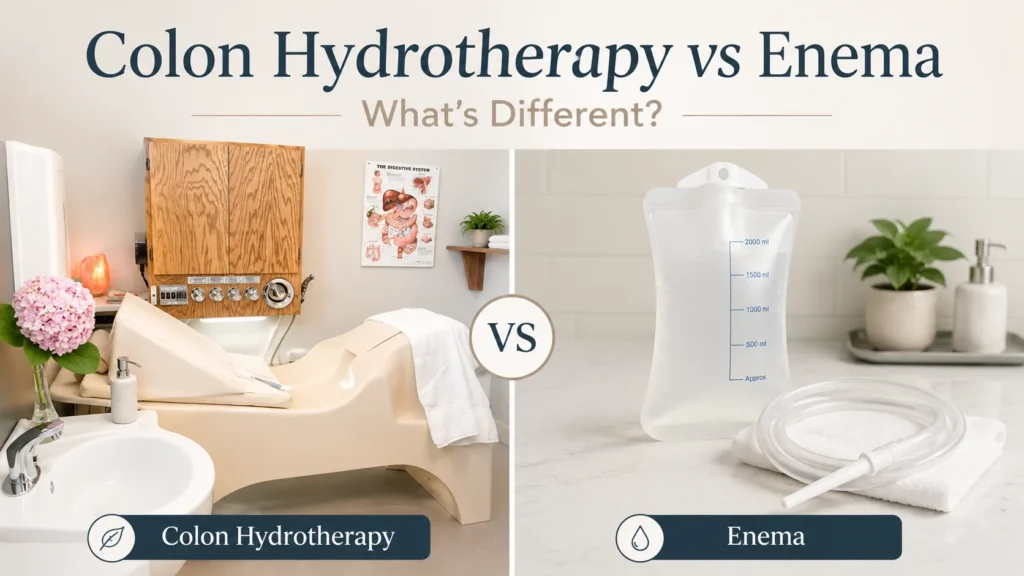
A colon hydrotherapy vs enema comparison often starts with one simple question: if both use water to support bowel evacuation, why would someone choose one over the other? The answer comes down to reach, setting, level of support, and your personal wellness goals. While both practices involve the lower digestive tract, they are not interchangeable experiences.
For people seeking digestive comfort, relief from occasional feelings of fullness, or a more supported wellness reset, understanding those differences can make the decision feel less confusing and much more personal.
Colon Hydrotherapy vs Enema: The Main Difference
An enema is typically a small amount of fluid introduced into the rectum through a short nozzle. It is commonly used at home or in a medical setting to encourage evacuation of the lower portion of the bowel. Depending on the type of enema and the reason it is used, the experience is usually brief and focused close to the rectum.
Colon hydrotherapy, also called a colonic, is a practitioner-led session that uses warm, filtered water to gently bathe the colon through a small disposable rectal nozzle. During a professional session, water enters and releases in a controlled cycle. The goal is not simply to create an urgent bowel movement, but to provide a calm, monitored experience that supports the body’s natural elimination process.
The difference is similar to the difference between handling a small task at home and receiving one-on-one support in a dedicated setting. An enema may be appropriate for a specific, short-term need. Colon hydrotherapy is a longer wellness service designed around comfort, privacy, and professional attention.
How the Experience Feels
With an enema, people often manage the process on their own. This can be convenient, but it may also feel rushed or uncomfortable for someone who is new to bowel-support practices. Retaining the fluid for the suggested amount of time can be difficult, and the experience may produce cramping or a sudden need to use the restroom.
During colon hydrotherapy, the client is comfortably positioned in a private treatment room. A trained practitioner remains available throughout the session, helping the client feel at ease and explaining what to expect. The water flow is gentle and adjusted with care, while the client can rest, breathe, and allow the process to unfold at a comfortable pace.
Professional enclosed equipment also makes a meaningful difference. Waste is carried away through closed tubing, which supports cleanliness, discretion, and a more relaxed experience. For many clients, the privacy and respectful guidance are just as important as the service itself.
Reach and Level of Support
An enema generally affects the rectum and lower bowel. It may be used when a person needs help passing stool from that area, including as directed before certain medical procedures. It is not designed to provide a full colon hydrotherapy experience.
Colon hydrotherapy uses repeated, gentle fills and releases over a longer appointment. Because the process is managed gradually, the practitioner can observe the client’s comfort, encourage position changes or light abdominal massage when appropriate, and make adjustments within the scope of the service.
That does not mean colon hydrotherapy is automatically the right choice for every person or every concern. Occasional constipation, persistent digestive symptoms, abdominal pain, or changes in bowel habits deserve thoughtful attention. A wellness session should never replace medical evaluation when symptoms are severe, new, ongoing, or concerning.
Safety Matters More Than Convenience
Both enemas and colon hydrotherapy involve real considerations. Using too much fluid, using products improperly, or repeating enemas too often can irritate the bowel and affect fluid or electrolyte balance. Some over-the-counter enemas contain ingredients that may not be suitable for everyone, particularly people with kidney conditions, heart conditions, dehydration, or certain medication needs.
Colon hydrotherapy should always be performed by a properly trained practitioner using professional equipment, clean protocols, and filtered water. A responsible provider will ask about your health history, medications, prior surgeries, and current symptoms before moving forward. They should also be willing to say when a session is not appropriate.
Colon hydrotherapy and enemas may not be suitable for people with active inflammatory bowel disease, rectal bleeding, significant hemorrhoid concerns, recent colorectal surgery, bowel obstruction, diverticulitis, severe abdominal pain, or certain other medical conditions. Pregnancy and complex health conditions also call for individualized medical guidance. If you are unsure, speak with your physician before scheduling any colon cleansing service.
What Colon Hydrotherapy Does Not Need to Promise
Wellness language can sometimes make big promises about “detoxing,” but your body already has systems that process and remove waste, including the liver, kidneys, lungs, and digestive tract. A professional colonic should not be presented as a cure for disease, a substitute for medical care, or a guaranteed answer for weight loss, chronic bloating, skin concerns, or inflammation.
What many clients do appreciate is the experience itself: time set aside for personal care, a sense of lightness after a session, support for regular elimination, and the calming feeling of being cared for in a clean, private environment. Those experiences are personal and can vary from one individual to another.
The most trustworthy approach is both holistic and realistic. Listen to your body, keep your healthcare provider involved when needed, and choose services that respect your comfort and health history.
When an Enema May Make More Sense
An enema may be the more practical option when it has been recommended by a medical professional for a specific reason, such as bowel preparation or occasional short-term constipation. It can also be a familiar option for someone who has used one safely and understands the instructions.
However, convenience does not always equal comfort. If you feel anxious about doing it yourself, have had unpleasant cramping with enemas, or want a more guided setting, a private colon hydrotherapy appointment may feel more supportive. The right choice depends on why you are considering it in the first place.
When Colon Hydrotherapy May Be a Better Fit
Colon hydrotherapy may appeal to adults who value a practitioner-led wellness experience rather than an at-home approach. It can be especially appealing for those who want discretion, time to relax, and individualized attention before and during the session.
At Five Star Colonic, the focus is on providing that experience with privacy, professional care, and more than 20 years of experience. I-ACT certification, enclosed professional equipment, filtered water, and one-on-one appointments help create a setting where clients can ask questions openly and feel respected throughout the visit.
A good session begins before any equipment is used. You should have an opportunity to discuss your goals, health considerations, and concerns. You should never feel pressured to continue if something does not feel right.
Preparing for Either Option
Whether you are considering an enema or a colonic, keep preparation simple. Drink water as appropriate for your health needs, avoid arriving overly full from a heavy meal, and give yourself time afterward to rest and use the restroom if needed. For a professional colonic, many clients prefer light meals before their appointment and a quieter schedule afterward.
Be honest during intake. Mention medications, supplements, digestive diagnoses, surgeries, pregnancy, and any symptoms that concern you. That information helps a practitioner determine whether a session is appropriate or whether you should first speak with a medical provider.
The best choice is not the one that sounds most dramatic. It is the one that fits your needs, respects your health, and leaves you feeling calm and well supported. If you are curious about colon hydrotherapy, a private conversation with an experienced practitioner can offer the reassurance and clarity that an at-home option often cannot.